The Flower Mill
The Thursday Murder ClubThe Flower Mill is Peter Ward’s florist shop on Pearson Street in Folkestone, a bright and prosperous local business whose flowers help revive the street. It is also a place where an old identity meets a carefully remade life: the mild-mannered shopkeeper is Bobby Tanner, once involved with Tony Curran and the criminal past that followed him. The shop’s everyday work and its CCTV become crucial to Elizabeth’s inquiry into Curran’s murder, turning a welcoming neighborhood business into evidence of Peter’s changed circumstances and whereabouts.
Setting and the Street’s Revival
Before The Flower Mill arrived, Pearson Street was a struggling shopping area: its newsagent had no papers, its café was boarded up, and its pub was close to failing. Peter’s shop brought a vivid new presence to the street. Its flowers, including orchids, sweet peas, and Transvaal daisies, drew customers who began making detours from the town centre. Their visits helped make the street worth discovering, and one new customer bought the lease on the boarded-up café.
The recovery unfolded through a chain of local decisions rather than a single redevelopment. A bride who came to Peter for flowers visited the café and saw room for a hardware shop; The Tool Chest later opened beside The Flower Mill, opposite Casa Café. The café’s owner bought the pub and began serving food, while the newsagent ordered more stock as foot traffic increased. The travel agent refreshed its fading posters, and other shops also benefited. A butcher opened his own store, and a local art group rented a vacant storefront to display members’ work. The Flower Mill’s success thus matters beyond its own trade: Peter’s expertise gives people a reason to come to Pearson Street, and that attention helps other independent businesses take root.
The street’s newfound activity is described as busy, friendly, local, and happy. Joyce sees the possibility that commercial success could eventually bring a Costa and erode the very character that made Pearson Street appealing; she also admits that she likes Costa, making her concern knowingly ambivalent. The Flower Mill stands at the centre of that tension: its growth contributes to change, but the change it sets in motion is initially grounded in local shops and personal relationships rather than an impersonal chain-store presence.
Peter Ward’s Shop and Daily Life
Peter is presented as a capable florist whose knowledge has earned the trust of a small-town clientele. His business is part of an informal neighborhood network: while he takes half an hour off, Becky from The Tool Chest keeps an eye out for customers. He buys cappuccinos for Joyce and Elizabeth at Casa Café, and the arrangement feels characteristic of a street where neighboring businesses look after one another. The Flower Mill is therefore both a commercial anchor and a marker of Peter’s integration into a community that knows him by his present name and work.
The shop’s ordinary routine also has a distinctive history. A large lorry arrives each day, and Peter unloads flowers from it and carries them into the shop. The deliveries come from a nursery in Belgium run by a young man Peter knew during an earlier period of his life. Peter’s familiarity with flowers was partly acquired while he was involved in criminal activity abroad: he learned the trade and saw flowers at their most beautiful, although he had not risen through the ranks. After leaving that life, he turned that knowledge into a legitimate livelihood. The lorry’s repeated arrival makes the past part of the shop’s daily operation, but in a changed form: Peter now unloads flowers for sale rather than continuing his former criminal pursuits.
Bobby Tanner and the Murder Inquiry
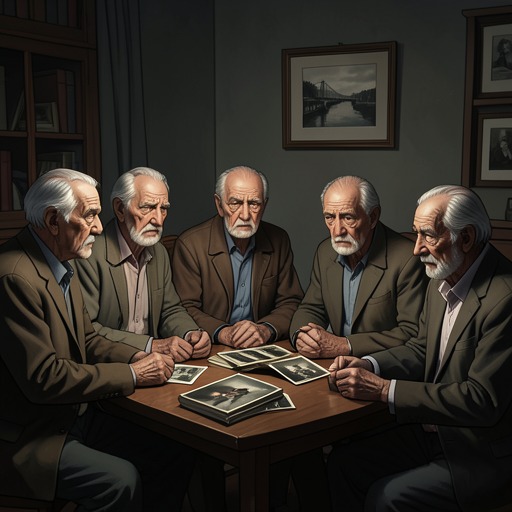
The apparent story of a contented florist is complicated when Elizabeth meets Peter at Casa Café. His greying appearance and easy manner suggest a man settled into a quiet life, but a scar beneath his right eye and the strength visible in his arms recall another possibility. Elizabeth lays a photograph of Tony Curran and his associates at the Black Bridge pub on the table. Peter recognizes the place and confirms that he spent several nights there. The photograph connects him to Curran’s circle, while the question facing Elizabeth is whether the former Bobby Tanner might also have been Curran’s killer.
For Elizabeth, The Flower Mill supplies a way to test suspicion against a concrete record. Peter takes her to the shop and shows her the CCTV footage from the day Curran was murdered. He is clearly visible behind the till. That recorded presence helps Elizabeth rule him out as the person who bludgeoned Curran, despite the history suggested by the photograph and Peter’s former identity. Peter, for his part, suspects Gianni Gunduz: he believes Curran had betrayed him to the police and that Gianni had in turn stolen from Curran. The footage does not resolve every aspect of the murder, but it changes Peter’s position in the inquiry from possible killer to a witness with a theory about another suspect.
A Present Built on a Past
The Flower Mill gives material shape to Peter’s attempt to leave Bobby Tanner behind. He has made a livelihood from knowledge gathered in an earlier life, and the same flowers that once belonged to a criminal episode now arrive openly at a neighborhood shop. Peter’s account of going straight is linked to the fact that no one came looking for him and no one examined his passport closely enough to expose his past; in Folkestone, he has found a measure of peace. The shop’s success does not erase the possibility of violence associated with his former companions, but it shows how thoroughly his days have acquired a different purpose.
The location consequently serves two distinct functions in the story. As a florist on Pearson Street, it helps set a communal revival in motion and represents the ordinary trust built between small businesses. As the site of footage placing Peter behind the till, it becomes part of the investigation’s evidentiary chain. Those roles meet in the contrast between what the shop seems to promise and what its owner’s history might suggest: The Flower Mill is not proof that Peter has no past, but it helps show that, on the day of Curran’s murder, he was at work in the life he has made for himself.